
In the modern hospitality industry, security systems are no longer just about locking a door—they are about safety, convenience, and operational efficiency. Hotels are rapidly shifting from mechanical systems to smart access control solutions. One of the most common upgrades is the hotel card lock system, replacing traditional key-based locks.
So what exactly is the difference between a hotel card lock and a traditional lock? Let’s break it down in a practical way.
🔐 1. Access Method: Key vs Smart Card
Traditional locks rely on physical metal keys. Once a key is lost or duplicated, security becomes a serious risk.
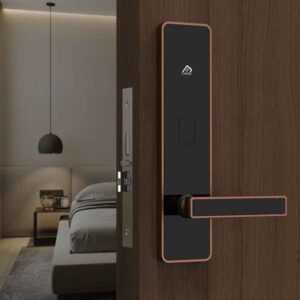
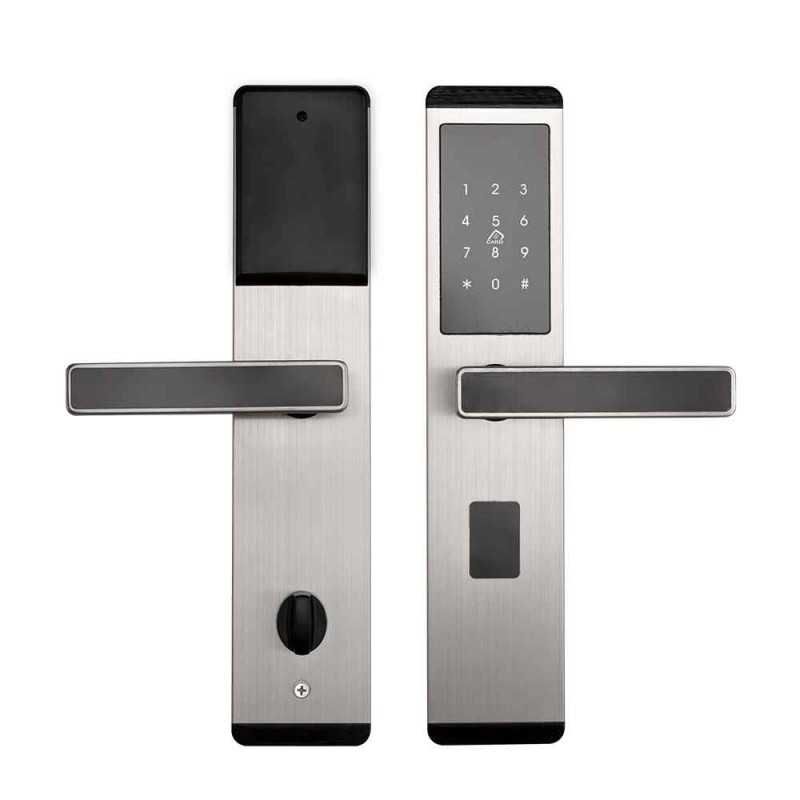
In contrast, a modern hotel card lock / hotel card door lock / hotel key card lock uses RFID or magnetic cards for access control.
Key differences:
- Traditional lock → physical key required
- Hotel card lock → encoded smart card required
- Card can be reprogrammed instantly
- Lost cards can be deactivated immediately
👉 This makes hotel card systems far more flexible and secure.

🛡️ 2. Security Level Upgrade
Traditional locks are vulnerable to:
- Key duplication
- Lock picking
- Mechanical wear and failure
A modern hotel card lock manufacturer designs systems with advanced protection features.
For example, WEISA hotel lock systems include:
- 🔒 Anti “little black box” attack protection (anti-theft signal interference prevention)
- 🔑 All-copper blade anti-theft lock cylinder
- 🧱 Durable 304 stainless steel structure
- 🛑 Tamper-resistant electronic design
👉 These features significantly increase hotel room security compared to mechanical locks.

⚙️ 3. Management Efficiency: Manual vs Digital Control
Traditional locks require:
- Physical key distribution
- Manual tracking
- Re-keying when keys are lost
Hotel card lock systems allow digital management:
- Card issuance in seconds
- Room access authorization control
- Instant cancellation of lost cards
- Centralized hotel management system
👉 This reduces labor cost and improves front desk efficiency.
🔐 4. Temporary Password Functionality
One of the most advanced features in modern systems is the temporary password function.
WEISA hotel card lock systems support:
- One-time temporary password
- Automatically invalid after use
👉 This is ideal for:
- Maintenance staff
- Emergency access
- Short-term guest entry
Traditional locks simply cannot offer this level of control.

🧱 5. Durability and Material Differences
Traditional locks are often purely mechanical, while modern systems are engineered for long-term hotel use.
WEISA hotel lock system highlights:
- Material: 304 stainless steel
- Lock cylinder: all-copper blade anti-theft core
- Designed for high-frequency hotel usage
👉 Result: longer service life and lower maintenance cost.
🏭 6. Role of a Hotel Card Lock Manufacturer
Choosing the right hotel card lock manufacturer is critical because system stability affects hotel operations directly.
A professional manufacturer like WEISA provides:
- OEM/ODM customization
- Stable batch production
- Security certification support
- System integration solutions for hotels
📊 Conclusion
The difference between traditional locks and hotel card locks is not just about technology—it is about upgrading the entire hotel management system.
| Feature | Traditional Lock | Hotel Card Lock |
|---|---|---|
| Access method | Mechanical key | Smart card |
| Security level | Basic | High (anti-theft + encryption) |
| Management | Manual | Digital system |
| Flexibility | Low | High |
| Temporary access | Not possible | One-time password supported |
As hotels continue to modernize, the shift toward hotel card lock / hotel card door lock / hotel key card lock systems is becoming standard rather than optional.
With enhanced security features such as anti-theft protection, durable stainless steel construction, and intelligent temporary password control, solutions provided by WEISA demonstrate how modern hotel security is evolving beyond traditional mechanical systems.